 Agro Dronovi
 Precision Technology — Drones, Sensors, Smart Fields
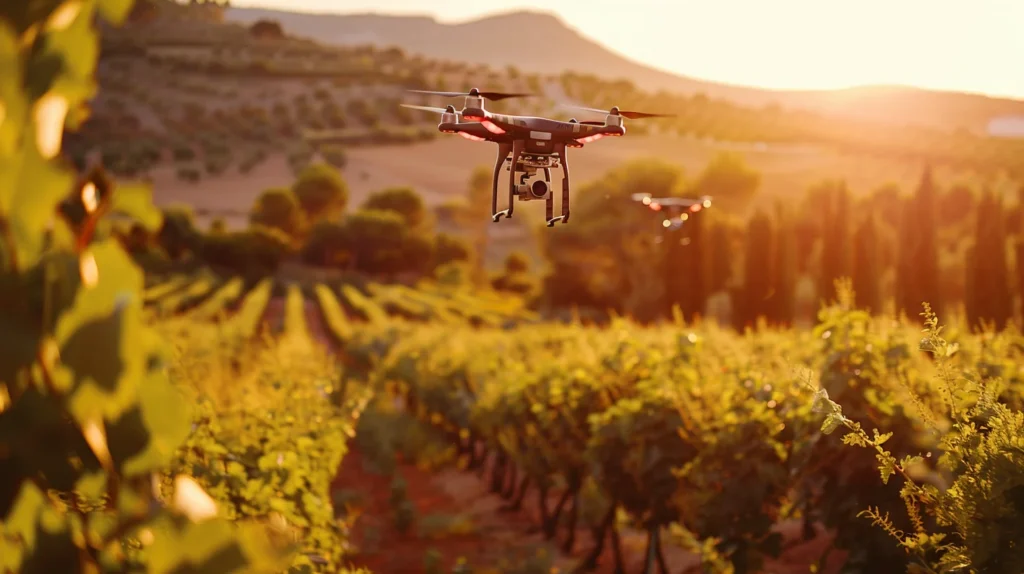
Precision agriculture is no longer a distant promise — it is already rewriting how Serbian farms operate, from Backa in the north to the hills of Sumadija. Instead of spraying an entire field at a uniform rate, drones with multispectral cameras map every square meter and apply exactly what that zone needs, nothing more.
What does a modern ag drone actually do? Platforms like the DJI Agras T40, XAG V40, and locally-supported options from Agremo and FlyPro cover up to 20 hectares per hour. They carry 40 liters of liquid, fly 3 meters above the canopy, and operate in conditions where tractors cannot — wet fields, post-rain soil, sloped parcels in Western Serbia.
IoT soil sensors run 24/7. Probes at 15, 30, and 60 cm push data via LoRaWAN directly into a mobile app. When moisture drops below a crop-specific threshold, the system sends an SMS or triggers the pivot irrigation system automatically.
Real costs for Serbian farms? A used DJI Agras T20 runs 8,000-12,000 EUR. A 3-sensor IoT kit with a gateway: 600-900 EUR. An RTK GPS receiver for the tractor (2 cm accuracy): 3,500 EUR. On farms above 50 hectares, these investments pay back within 2-3 years through savings on seed, fertilizer, and pesticide.
Practical checklist:
- Before buying a drone, get certified by the Civil Aviation Directorate (A1/A3 category, 3-5 months).
- Check IPARD subsidies — up to 65% reimbursement on precision equipment.
- Start small: one IoT sensor per crop, then expand.
- Line up a local service partner before buying — overseas repairs take 4-8 weeks.
Precision farming is not a luxury for large operators. It is a toolset that gives every farmer real control over their soil, backed by data rather than inherited assumptions.