 AI u Poljoprivredi
 Higher Yield, Lower Costs — What the Data Shows
The numbers do not lie. A meta-analysis of more than 200 precision-agriculture studies (Nature Food, 2024) found averages of 38% higher yield per hectare, 50% less pesticide, and 30% less water. The question is no longer “does it pay” — it is “how fast does it pay back”.
What does the economics look like in practice? Consider an 80-hectare Vojvodina corn farm averaging 8 t/ha before any precision investment:
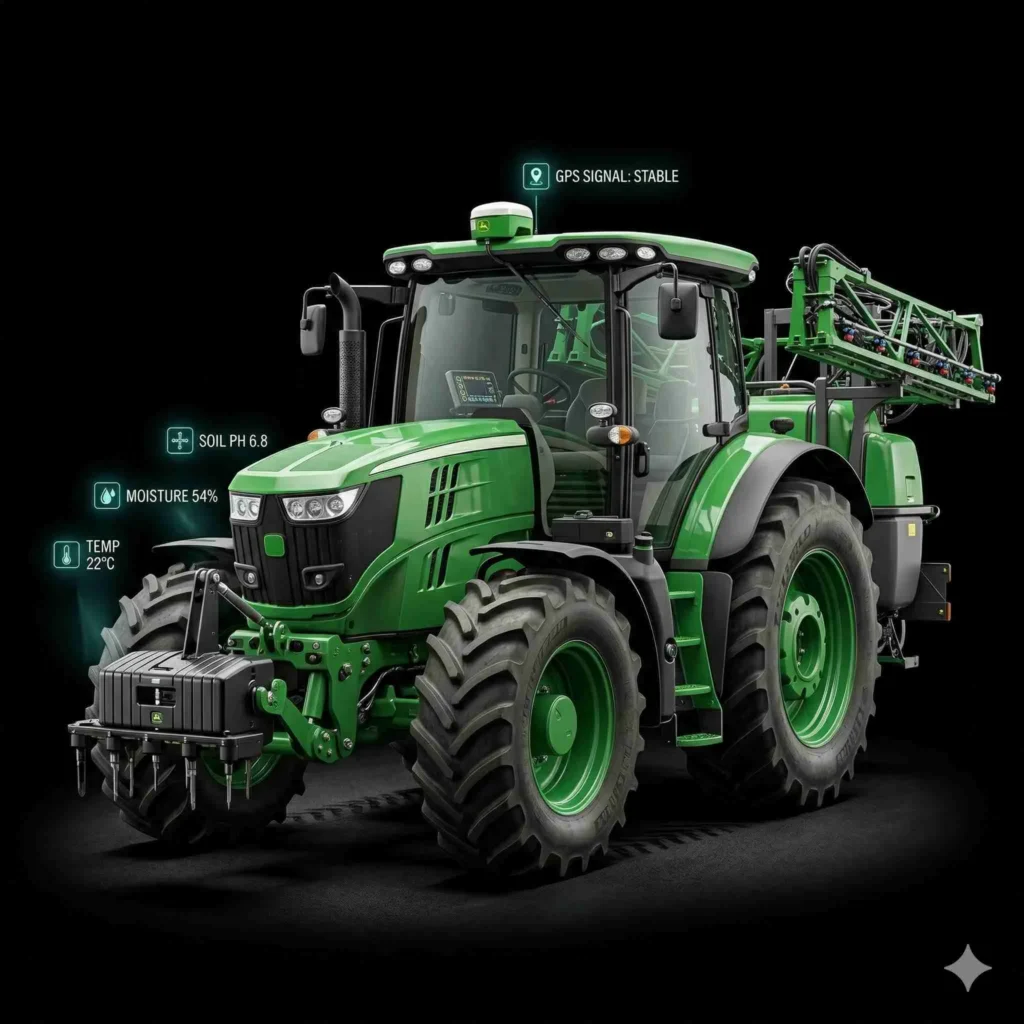
- Precision equipment investment (RTK-guided tractor + 5 IoT sensors + variable-rate applicator): 18,000 EUR.
- Annual seed savings (precise sowing, no overlap): 45 EUR/ha x 80 = 3,600 EUR.
- Annual fertilizer savings (variable-rate application): 90 EUR/ha x 80 = 7,200 EUR.
- Annual pesticide savings (section control, AI weed ID): 60 EUR/ha x 80 = 4,800 EUR.
- Yield uplift of 15% (conservative, below the meta-analysis mean): 1.2 t/ha x 80 x 180 EUR/t = 17,280 EUR.
Total annual gain: 32,880 EUR. Payback period: under 7 months of the first full season. Every subsequent year is pure upside.
Caveat: these numbers assume farms above 50 ha with consistent crops. Below 10 ha, the economics flip — the right strategy is cooperative use (drone rental, shared RTK base stations across 5-6 neighbors, group input purchases).
What does the data say about risk? IPARD subsidies cover 50-65% of equipment cost, so the real out-of-pocket drops to 6,500-9,000 EUR in the example above. A 5-year bank loan at 4.5% adds roughly 1,200 EUR/year — still leaving 31,000 EUR of net annual gain.
The key takeaway: adopt precision agriculture not because it is “modern”, but because the math works — and it strengthens every year as input costs rise and food prices stabilize.